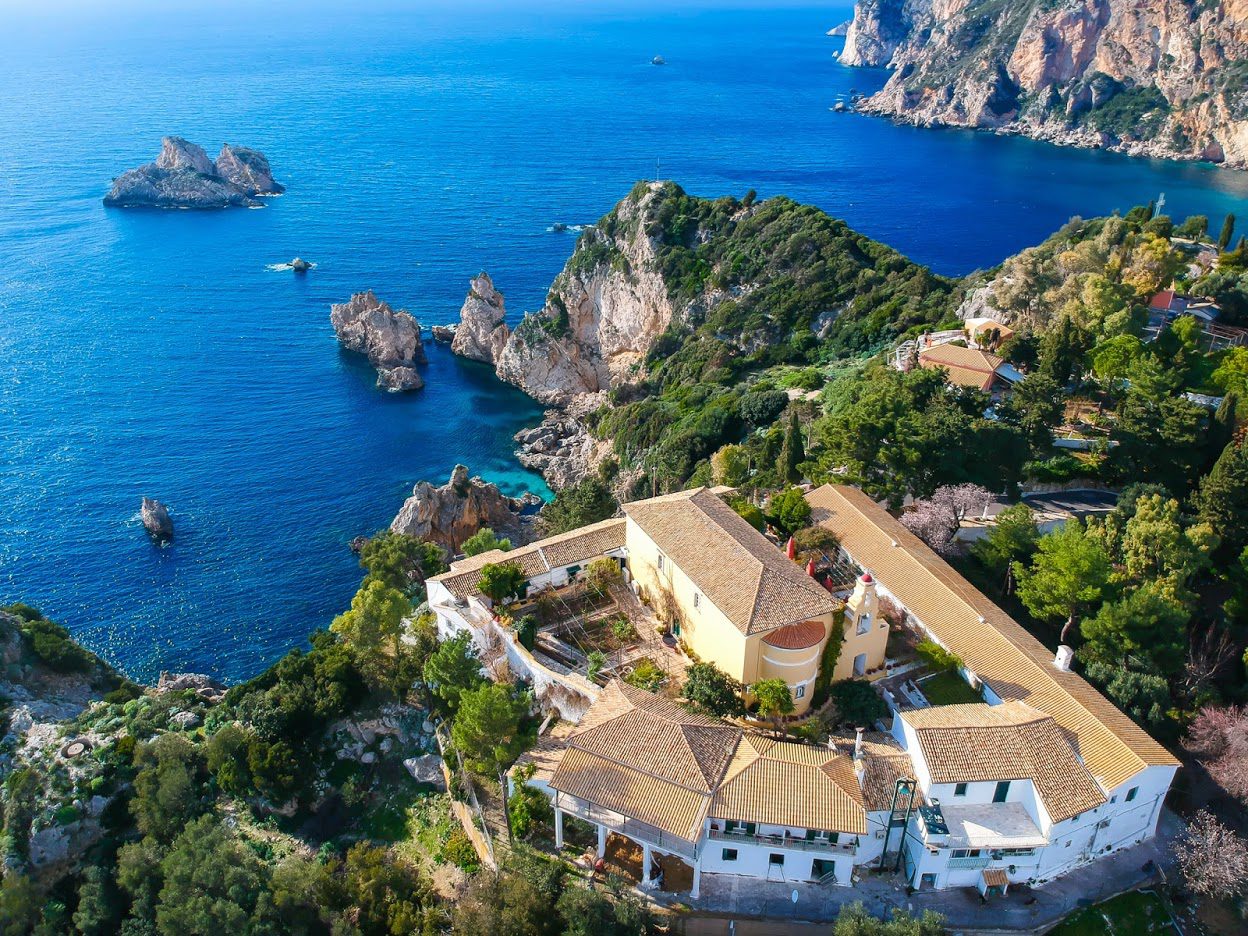
Paleokastritsa Monastery
5 min drive
This 13th-century monastery sits on a hill above the diving center and provides panoramic views of the coastline. It serves as a quiet contrast to the activity of your morning sea excursion.

Corfu's dive map is lopsided. This best scuba diving corfu guide sets out which sites earn the trip, what each one asks of your certification, and when the Ionian Sea is at its clearest.
Quick answer
Arrive between 09:00 and 11:00: morning dives offer the best visibility and calmest water conditions before afternoon winds. Conditions stay workable through October.
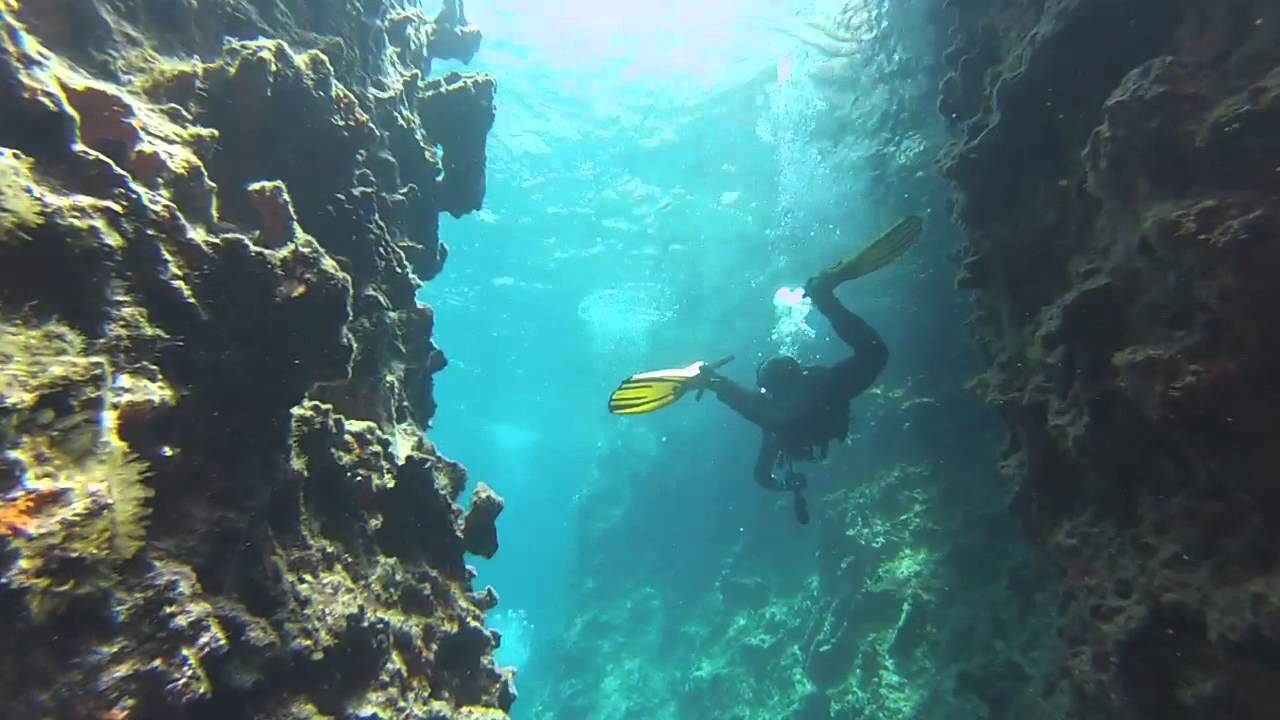
The Ionian Sea barely has a tide. That single piece of geography explains why most shortlists of the best scuba diving corfu converge on one stretch of coast: with little tidal flow to lift sediment, the limestone drop-offs off Paleokastritsa stay clear, and long-range visibility there is routine rather than lucky. Corfu's underwater terrain is lopsided. The east coast, facing the Greek mainland, shelves away into sand and seagrass — shallow, forgiving, better suited to snorkelling than to depth. The north-west behaves differently. There the island's karst cliffs carry on below the waterline, producing walls, chimneys and swim-throughs a short boat ride from shore. Names recur in every dive log: the Colovri wall off the islet at the bay mouth, the Ambelaki reef, the caverns beneath Cape Lakones, and the sheer face under Ortholithi. Because those sites stack shallow reef shelves above deeper drop-offs, one boat can carry an Open Water diver and an advanced one to the same mooring. Season and wind shape the rest. The sea here is bracing in spring, warms through the summer months and holds its heat into autumn, which makes October a quietly strong month: the high-season boats have thinned out and the water has not begun its winter churn. Wind matters more than temperature. The north-west coast is open to breezes that build as the day goes on, and that is the whole logic behind καταδύσεις στην Κέρκυρα, diving in Corfu: the sea is at its most co-operative early, and it rarely improves after lunch. Readers should use that to narrow a shortlist before they land. Certification decides access: a wall descent past recreational limits is closed to an entry-level card, while the shallow reefs, the posidonia meadows and the brighter caverns suit beginners and try-dive candidates alike. Interest decides the rest — octopus, moray eels, scorpionfish and nudibranchs on the reef; geology, light shafts and cold-water texture on the walls. Anyone weighing Corfu dive sites against each other, or scanning boat-dive listings for the best scuba diving corfu, will meet the same short roster of names, because this coastline has few genuine understudies. Call the centre, confirm which site the day's conditions allow, and let the dedicated sections below settle hours, fares, kit and transport.
“Wind matters more than temperature: the sea off Paleokastritsa is at its most co-operative early, and it rarely improves after lunch.”
The optimal window for scuba diving in Corfu is during the morning hours, specifically the best arrival window of 09:00–11:00. Diving early ensures the calmest water conditions and highest visibility before afternoon winds typically increase.
20°C–23°C water; calm seas
Warm weather and manageable crowds provide stable conditions for coastal dives.
25°C–27°C water; occasional thermal winds
Water temperatures are warmest, though boat traffic and coastal winds are at their peak.
23°C–25°C water; stable conditions
Clear waters persist as summer crowds diminish, offering ideal conditions for longer dives.
—
Arriving between 09:00 and 11:00 secures the best visibility and calmest surface conditions for all divers.
Verdict: The best slot for scuba diving is during the morning arrival window of 09:00–11:00, particularly throughout the months of September and October.
Paleokastritsa offers several landmarks within easy reach of the diving center, allowing you to complement your underwater exploration with local history and scenery. These sites are situated near the coast, making them convenient stops after your morning dive.
5 min drive
This 13th-century monastery sits on a hill above the diving center and provides panoramic views of the coastline. It serves as a quiet contrast to the activity of your morning sea excursion.
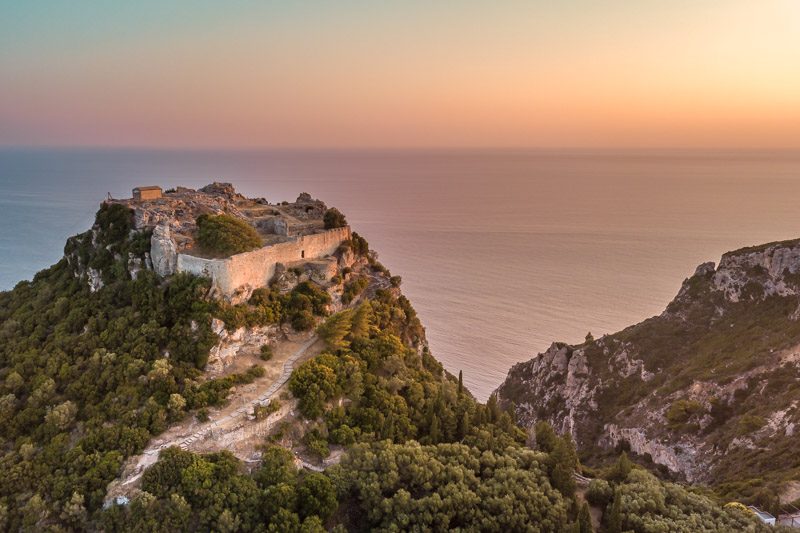
15 min drive
This Byzantine castle ruins complex occupies a high cliff overlooking the Ionian Sea. The historical site provides a clear vantage point to view the waters where you spent your morning diving.
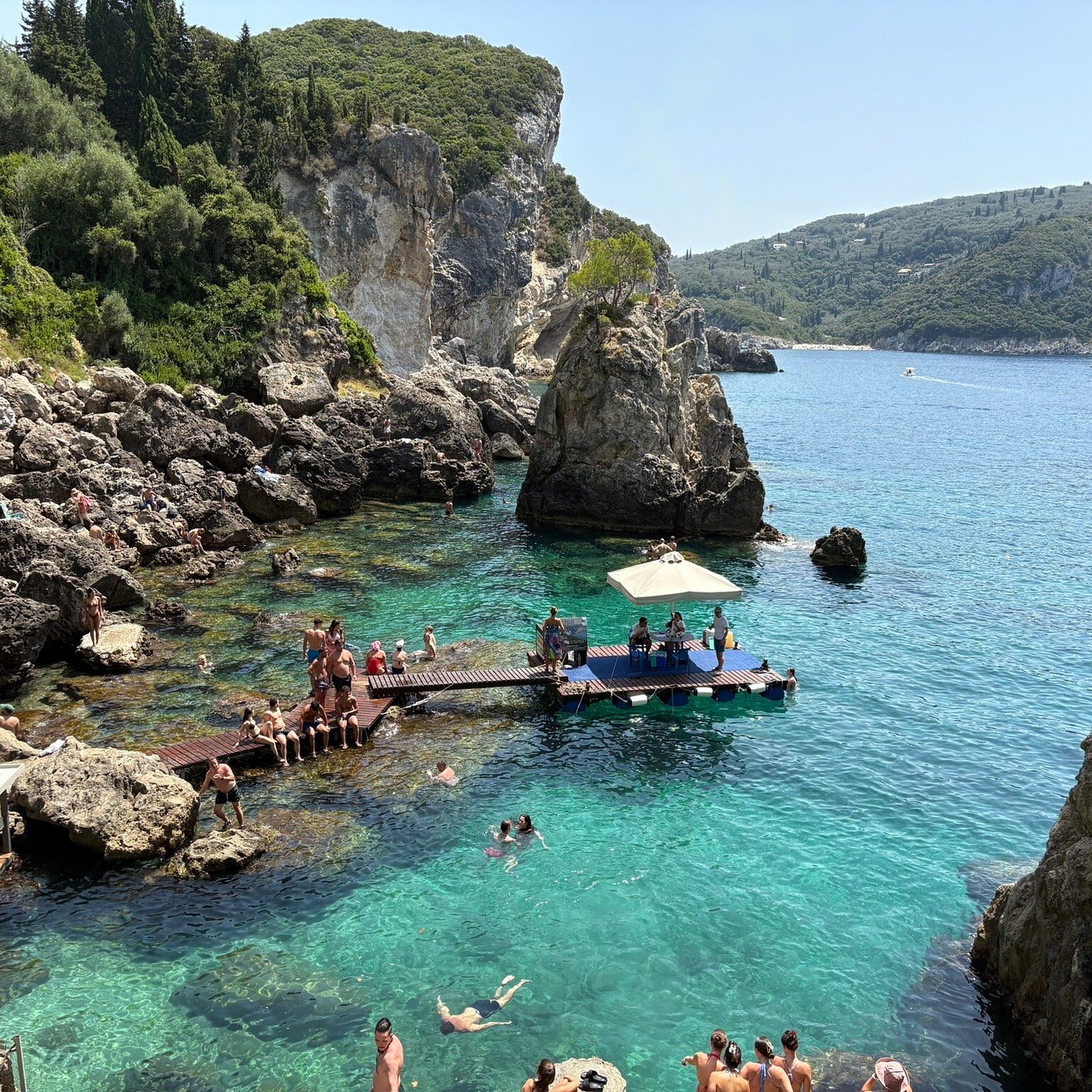
3 min drive
Located near the diving center, this rocky bay is suited for post-dive relaxation or a brief swim in clear water. It is a practical location to unwind while remaining in the immediate vicinity of the harbor.
Everything you need to know about best scuba diving corfu
The best scuba diving Corfu has to offer centers around Paleokastritsa, known for its clear Mediterranean waters and diverse marine life. Certified divers can access various underwater caves and reefs that provide excellent visibility for exploring the local seafloor.
To enjoy the best scuba diving Corfu has, prioritize morning trips to see the coastal topography clearly. Ensure you have your equipment and credentials prepared before arriving at the Paleokastritsa location.